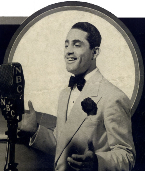
 In the golden glow of the interwar years, when British dance halls shimmered with delight and radio waves carried voices across the miles, few were as instantly recognizable- or as enduring- as that of Al Bowlly. Smooth, intimate, and effortlessly romantic, Bowlly became one of the defining vocalists of the 1930s, leaving behind a legacy that still resonates with listeners nearly a century later.
Born Albert Allick Bowlly on January 7, 1898, in Lourenço Marques (now Maputo, Mozambique), his life began far from the polished stages of London’s West End. The son of Greek and Lebanese parents, Bowlly’s early years were marked by instability and displacement. His family relocated to Johannesburg, South Africa, where he grew up and began working various jobs- barber, jockey, and mechanic- before music emerged as his true calling.
Bowlly’s entry into professional music was gradual but determined. He joined touring bands as a guitarist and sometimes vocalist across Southern Africa and later India, developing not only his vocal technique but also a cosmopolitan sensibility that would shape his career. By the mid-1920s, he had arrived in London- a city fast becoming the epicenter of European popular dance music.
It was there that Bowlly found his footing. His early recordings with orchestras led by figures like Fred Elizalde and Roy Fox showcased his distinctive crooning style, which blended American jazz influences with a uniquely British refinement. But it was his collaboration with Ray Noble that catapulted him to stardom.
Together, Bowlly and Noble produced a string of hits that defined the era. Songs such as “Midnight, the Stars and You,” “The Very Thought of You,” and “Love Is the Sweetest Thing” became staples of British dance halls and radio broadcasts. Bowlly’s voice- clear, emotive, and unforced- offered listeners an intimacy that felt almost conversational, a hallmark of the emerging “crooner” style popularized in America by artists like Bing Crosby.
By the early 1930s, Bowlly was among the most recorded artists in Britain, with hundreds of sides to his name. His work extended beyond the United Kingdom, including successful tours in the United States, where he performed with leading orchestras and appeared in early sound films. Yet, despite his success, Bowlly’s career was not without turbulence. Disputes with bandleaders, financial instability, and the shifting tastes of the public often forced him to adapt quickly.
Still, his artistry remained consistent. Bowlly had an uncanny ability to interpret lyrics with emotional precision- never overwrought, always sincere. In an era before widespread amplification, his microphone technique allowed him to deliver performances that felt both technically controlled and deeply personal. This balance helped define the aesthetic of 1930s popular music and influenced generations of vocalists who followed.
When Ray Noble and Al Bowlly arrived in the United States in the autumn of 1934, Noble quickly organized a new orchestra featuring standout musicians including Charlie Spivak, Glenn Miller, Bud Freeman, and Pee Wee Erwin. The ensemble secured a prestigious residency at the Rainbow Room atop Rockefeller Center, placing them at the center of Manhattan’s nightlife. Regular coast-to-coast broadcasts on NBC and CBS quickly elevated the orchestra into the upper ranks of America’s most popular dance bands.
Bowlly, meanwhile, emerged as a star in his own right. He headlined his own NBC radio program, was the subject of a dedicated fan magazine chronicling his career, and saw his likeness featured prominently on sheet music covers nationwide. By 1936, his popularity had surged to such heights that he surpassed Bing Crosby in a national popularity poll- an extraordinary benchmark in the golden age of the crooner.
As the decade progressed, however, the musical landscape began to change. The rise of swing music and larger, more rhythm-driven ensembles shifted the spotlight away from the genteel dance band style that had made Bowlly famous. While he continued to record and perform, his prominence gradually waned.
Then came World War II.
Like many entertainers of his generation, Bowlly contributed to the war effort through performances aimed at boosting morale. London, however, was under relentless bombardment during the Blitz, and the dangers were ever-present. On the night of April 16, 1941, a German parachute mine exploded near Bowlly’s flat in Mayfair. The blast killed him instantly. He was 43 years old.
His death marked a tragic and abrupt end to a remarkable career. Yet, in the decades since, Bowlly’s music has experienced a quiet but persistent revival. Perhaps most notably, his recording of “Midnight, the Stars and You” was featured in The Shining, introducing his voice to a new generation of listeners and cementing its haunting, timeless quality.
Today, Al Bowlly is remembered not only as a prolific recording artist but as a pioneer of modern vocal performance. His work bridged continents and styles, helping to shape the evolution of popular music during a transformative period in history. For aficionados of jazz and big band music, his recordings remain essential listening- documents of a time when melody and lyricism reigned supreme.
In an age defined by rapid technological change and cultural upheaval, Bowlly’s voice offered something rare: a sense of calm, clarity, and emotional truth. It is perhaps this quality that ensures his music endures. Long after the dance halls have faded and the orchestras have fallen silent, the voice of Al Bowlly continues to sing- softly, elegantly, and forever in tune with the human heart.
The music of vocalist Al Bowlly can be heard on Swing Street Radio.
Craig Roberts writes the “Hot Big Band News” column for Swing Street Radio, and on occasion claims to have been Les Brown’s tennis coach.