On a brisk March evening in 1926, a new kind of energy pulsed through Harlem. Crowds gathered along Lenox Avenue, pressing toward the doors of a grand new ballroom that promised something rare for its time: elegance without exclusion. When the Savoy Ballroom opened on March 12 of that year, it didn’t just unveil a dazzling entertainment venue- it quietly rewrote the social rules of New York nightlife.
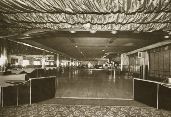
The building itself was staggering in scale and ambition. Stretching an entire city block between 140th and 141st Streets, the Savoy welcomed thousands on its first night. Though designed to hold about 4,000 people, an estimated 5,000 managed to squeeze inside, with many more turned away. Those who entered stepped into a world of polished marble, gleaming mirrors, chandeliers, and colored lights that shimmered across one of the largest dance floors in the city. Known affectionately as “the Track,” the vast expanse of smooth wood quickly became the beating heart of the room.
Yet the Savoy’s true innovation wasn’t architectural- it was cultural. At a time when segregation defined much of American public life, the Savoy stood apart. Black and white patrons shared the same dance floor, without ropes, restrictions, or separate sections. In an era when even Harlem’s most famous clubs enforced racial barriers, the Savoy created a space where music and movement dissolved them. Dancer Fannie Manning would later describe it as perhaps the only truly integrated ballroom in the country.
This openness was not accidental. The Savoy’s leadership reflected a deliberate collaboration across racial lines. Business partners Jay Faggen and Moe Gale joined forces with Charles Buchanan, a Black entrepreneur whose management shaped the ballroom’s identity from the outset. Buchanan enforced standards of professionalism and decorum that made the Savoy feel both refined and welcoming. Staff were trained not only in service but in courtesy, helping cultivate an environment where women felt comfortable and patrons of all backgrounds could relax.
Inside, the evening unfolded with precision and spectacle. Guests were greeted and guided through the venue by an all-Black staff, including host Madeline Allison, a multifaceted professional connected to prominent Black publications and intellectual circles. The ballroom’s layout featured lounges, private seating areas, and soda fountains- Prohibition ensured that alcohol was absent, but the atmosphere lacked nothing in excitement.
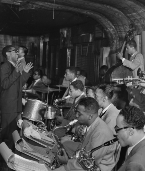
Music, of course, was the Savoy’s lifeblood. On opening night, three orchestras took the stage in seamless succession, thanks to an innovative dual-bandstand design that allowed one ensemble to begin as another finished. Among them were Fletcher Henderson and Fess Williams (and his Royal Flush Orchestra), both leading prominent Black orchestras that defined the sound of the era. Their bands reflected another often overlooked dimension of early jazz: its multicultural roots. Musicians of Puerto Rican heritage, including veterans of the famed Harlem Hellfighters military band, contributed to the vibrant musical tapestry that filled the Savoy with rhythm.
As midnight gave way to early morning, the crowd remained electrified. Henderson’s orchestra closed the night to thunderous applause, and those in attendance left knowing they had witnessed something extraordinary- even if they couldn’t yet articulate just how significant it would become.
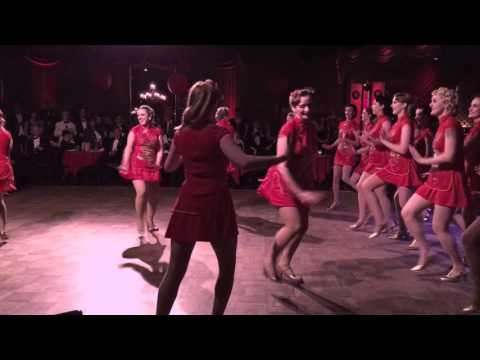
In the years that followed, the Savoy grew into a cornerstone of American cultural life. It became synonymous with the rise of the Lindy Hop, a dance style that captured the exuberance of swing music and spread far beyond Harlem. Legendary performers would define their careers on its stage, including Ella Fitzgerald and Chick Webb, whose band became a fixture at the ballroom. The song “Stompin’ at the Savoy,” composed in the early 1930s, immortalized the venue in jazz history.
The Savoy also thrived as part of the broader cultural renaissance transforming Harlem in the 1920s. Just blocks away, writers, artists, and intellectuals were redefining Black identity and expression. Figures like poet Langston Hughes and novelist Countee Cullen moved through the same neighborhood streets, contributing to a flourishing creative ecosystem. While other venues capitalized on Black culture while excluding Black patrons, the Savoy embraced the community it served.
That contrast was especially stark when compared to the nearby Cotton Club, which showcased top-tier Black performers for largely white audiences and enforced strict segregation. The Savoy rejected that model entirely. Its very name- evoking refinement and grandeur- signaled a different vision: a place where sophistication and accessibility could coexist.
Despite its elegance, the Savoy remained intentionally affordable. Admission prices were kept within reach of working-class patrons, reinforcing its identity as a community space rather than an exclusive enclave. The ballroom hosted charity events, social gatherings, and celebrations that tied it closely to Harlem’s everyday life.
Its popularity was immediate and sustained. Within months of opening, the Savoy was drawing massive crowds nightly. Its reputation only grew through the decades, fueled by legendary “battle of the bands” competitions and a steady stream of groundbreaking performances. Even challenges- such as a temporary closure during the 1940s- could not diminish its standing as a cultural landmark.
By the time the Savoy closed its doors in 1958, it had long since secured its place in history. More than just a ballroom, it had been a proving ground for musical innovation, a birthplace of iconic dance, and a rare space where social barriers briefly fell away. A century after that opening night, its legacy endures- not only in the music and dance it helped popularize, but in the vision of inclusion it brought to life on a Harlem dance floor.
The music of Savoy greats like Chick Webb and Ella Fitzgerald can be heard on Swing Street Radio.
Craig Roberts writes the “Hot Big Band News” column for Swing Street Radio, and on occasion claims to have been Russ Morgan’s dentist.