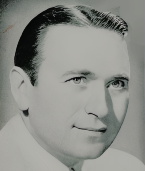
 During the height of the swing era, when the airwaves pulsed with the energy of big bands and dance halls throbbed with jitterbugging feet, one trumpet tone stood apart for its smoothness, clarity, and warmth. That tone belonged to Charlie Spivak—affectionately known as “The Man Who Plays the Sweetest Trumpet in the World.” Spivak’s name may not evoke the same instant recognition as Glenn Miller or Benny Goodman, but his contributions to big band music and the longevity of his orchestra during the 1940s made him a staple of American musical life.
Born February 17, 1907- most likely in Ukraine- Charlie Spivak’s early years remain somewhat mysterious. Some records suggest his family emigrated when he was a child, settling in New Haven, Connecticut, where he would be raised. Spivak’s personal papers confirm the Ukrainian origin, and it was in New Haven where he learned to play the trumpet, quickly distinguishing himself in his high school band.
After playing with local groups, Spivak began his professional career in the mid-1920s with Johnny Cavallaro’s orchestra, before gaining broader experience with the popular band of Paul Specht between 1924 and 1930. The young trumpeter’s career quickly gathered steam, leading to stints with some of the biggest names of the day including Ben Pollack, Tommy and Jimmy Dorsey, and Ray Noble. He even appears with Glenn Miller on the early Miller recording (1935) “Solo Hop.”
Despite years spent alongside some of jazz’s most influential figures- including studio work with Gus Arnheim, Raymond Scott, and Bob Crosby- Spivak’s own musical path veered toward a smoother sound. Rather than embracing the improvisational intensity of jazz, his trumpet was best known for its sweet, lyrical quality. His strength lay in leading trumpet parts and expressive ballads, qualities that would come to define his own band when he finally stepped into the spotlight.
It was Glenn Miller, a friend and former colleague, who encouraged and financially supported Spivak’s move into bandleading. Spivak formed his first orchestra in November 1939, though it was short-lived. Undeterred, he tried again, this time taking over the existing band of Bill Downer. The result was one of the most successful big bands of the 1940s, playing a rich catalog of ballads and dance tunes that defined the decade’s dance floors.
At the heart of the band’s success was a blend of talent and tasteful orchestration. Among his sidemen were future stars like drummer Dave Tough, trumpeters Les Elgart and Paul Fredricks, and saxophonist Don Raffell. Arrangers like Nelson Riddle- who would later craft iconic scores for Frank Sinatra- and Sonny Burke helped shape the band’s polished sound. Vocalists June Hutton and Irene Daye brought glamour and charm to the performances, with Daye eventually becoming Spivak’s wife in 1950.
Spivak’s popularity soared during the war years, with his orchestra regularly heard on the radio, seen in dance halls, and featured on popular recordings. While he lacked the flash of other trumpet bandleaders like Harry James, Spivak’s style was elegant and accessible.
His recordings, including sentimental hits like “Star Eyes” and “My Devotion,” earned him a loyal following that endured long after the big band craze began to fade.
After World War II, Spivak scouted top trumpeter Paul Fredricks, formerly of Alvino Rey’s Orchestra, who had just left military service in 1946. Fredricks’ addition reinvigorated the band, helping it reach its postwar peak and extend its life into the 1950s. The Spivak orchestra finally disbanded in 1959, marking the end of an era for one of the last enduring sweet bands of the swing generation.
Following the breakup of his band, Spivak relocated to Florida, where he led smaller groups until illness forced a temporary retirement in 1963. After recovering, he resumed playing- first in Las Vegas, and then in Greenville, South Carolina, where he eventually settled. In Greenville, he led a small group in local clubs, with his wife Irene once again serving as vocalist until her death from cancer in 1971.
One of Spivak’s regular venues in his later years was “Ye Olde Fireplace,” a restaurant-nightclub in Greenville where he served as resident bandleader. Performing with a modest group of musicians—trumpet, saxophone, bass, piano, and drums- Spivak played to intimate crowds, offering standards from the big band era and taking requests from enthusiastic patrons. Despite the smaller scale, his trumpet retained its trademark sweetness, charming audiences just as it had in the ballrooms of the 1940s.
Charlie Spivak continued to perform and record music well into his seventies. His dedication to his craft and his ability to adapt to changing musical landscapes made him one of the few big band leaders to remain active well past the swing era’s heyday. He passed away on March 1, 1982, in Greenville, shortly after celebrating his 75th birthday.
Though his style may have leaned more toward polished showmanship than boundary-pushing jazz, Spivak’s impact on American music was profound. His orchestra provided a soundtrack for a generation coming of age during war, romance, and recovery. His warm trumpet tone brought comfort to millions and set a standard for sweetness and style that few others matched.
In an age when swing ruled the airwaves, Charlie Spivak held a unique place in the big band firmament- not as the boldest innovator, but as the most heartfelt. His music, like the man himself, was graceful, refined, and unforgettable.
The music of trumpeter/leader Charlie Spivak can be heard on Swing Street Radio.
Craig Roberts writes the “Hot Big Band News” column for Swing Street Radio, and on occasion claims to have been Guy Lombardo’s Boatswain.