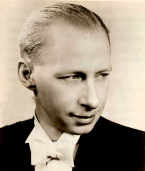
 Few composers from the golden age of popular music left a more enduring mark on both sides of the Atlantic than British bandleader, composer, and arranger Ray Noble. While his name may not be as instantly recognizable today as those of Glenn Miller, Duke Ellington, or Benny Goodman, Noble’s songs have become timeless standards, recorded by generations of artists and cherished by music lovers for nearly a century.
Born Raymond Stanley Noble in Brighton, England, on December 17, 1903, Noble displayed exceptional musical talent from an early age. After studying piano and orchestration, he won a prestigious arranging competition sponsored by Melody Maker while still in his teens. His success led to positions with the BBC and later His Master’s Voice (HMV) Records, where he became musical director and conductor of the famed New Mayfair Orchestra, one of Britain’s premier dance bands.
With vocalist Al Bowlly, Noble developed a sophisticated orchestral style that blended elegant arrangements with richly romantic melodies. Their recordings introduced American audiences to the polished sound of British dance bands and established Noble as England’s leading orchestra leader during the early 1930s.
His first international songwriting triumph came in 1931 with “Goodnight, Sweetheart.” The song became a major hit for Guy Lombardo and the Royal Canadians, while successful recordings by Bing Crosby, Russ Columbo, and Al Bowlly helped make it one of the defining ballads of the decade. Noble followed with another classic, “Love Is the Sweetest Thing,” further demonstrating his remarkable gift for writing melodies that combined warmth, sophistication, and emotional sincerity.
By 1934, Noble’s popularity had spread across the Atlantic. He relocated to New York, bringing Al Bowlly and drummer-manager Bill Harty with him. Because American Federation of Musicians rules prevented his British orchestra from working in the United States, Noble assembled an all-star American band with the assistance of a young trombonist and arranger named Glenn Miller. Among its members were future stars Charlie Spivak, Claude Thornhill, Will Bradley, Bud Freeman, and guitarist George Van Eps. The orchestra became a featured attraction at Rockefeller Center’s glamorous Rainbow Room and helped introduce Noble’s elegant musical style to American audiences.
Although his American orchestra enjoyed success, Noble eventually headed to Hollywood, where he expanded his career as a film composer, radio conductor, actor, and comedian. He appeared in films including The Big Broadcast of 1936, A Damsel in Distress with Fred Astaire, and The Pride of the Yankees. Radio listeners also came to know Noble for his dry British wit as a longtime comedic foil to ventriloquist Edgar Bergen, Charlie McCarthy, and Mortimer Snerd on one of radio’s most popular network programs.
Yet Noble’s greatest legacy remains his extraordinary catalog of songs. His signature composition, “The Very Thought of You,” topped the charts in 1934 and has since been recorded by hundreds of artists, including Bing Crosby, Billie Holiday, Nat King Cole, Frank Sinatra, Tony Bennett, Rod Stewart, Michael Bublé, and countless others. In 2005, the recording earned a place in the Grammy Hall of Fame, confirming its status as one of the great popular songs of the twentieth century.
Other Noble standards have proven equally influential. “Cherokee” evolved from a lush orchestral composition into one of jazz’s defining standards, becoming a favorite of Charlie Barnet and later serving as the harmonic foundation for bebop pioneers such as Charlie Parker. Songs including “The Touch of Your Lips,” “I Hadn’t Anyone Till You,” and “Love Is the Sweetest Thing” continue to be performed by jazz musicians and vocalists around the world.
Ray Noble passed away in 1978, but recognition of his achievements continued to grow. He was inducted into the Songwriters Hall of Fame in 1996, an honor that acknowledged his extraordinary contribution to the American Songbook despite his British roots.
Today, Ray Noble stands as one of the rare composers whose work bridged continents and generations. His melodies captured the elegance, romance, and optimism of the swing era, while his orchestras demonstrated that British dance bands could rival the finest ensembles in America. Nearly a century after they were written, his songs continue to enchant audiences- proof that great music, like great craftsmanship, never goes out of style.
The music of Ray Noble & His Orchestra can be heard on Swing Street Radio.
Craig Roberts writes the “Hot Big Band News” column for Swing Street Radio, and on occasion claims to have been Frankie Trumbauer’s Bartender.